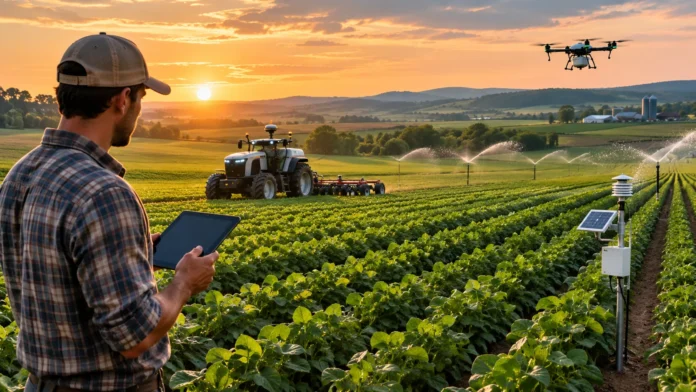

What Is Smart Farming and How Does It Work?
Smart farming is a modern approach to agriculture that uses technology to make farming activities more efficient and manageable. Instead of relying only on traditional methods, farmers use sensors, connected machines, and digital tools to understand field conditions. These technologies help farmers make informed decisions about planting, watering, fertilizing, and harvesting while reducing unnecessary work and resource waste.
The main idea behind smart farming is simple: collect useful information and turn it into practical actions. For example, soil sensors can measure moisture levels, while weather monitoring systems help farmers prepare for changing conditions. With reliable information, farmers can respond to crop needs rather than following the same routine across every field.
Modern agriculture faces challenges such as unpredictable weather, rising production costs, labor shortages, and increasing food demand. Smart agricultural technology offers practical ways to address some of these problems without replacing farmers’ knowledge and experience. By combining digital information with traditional farming skills, agricultural businesses can improve productivity, manage risks, and build more resilient operations.
Why Smart Farming Is Becoming Important in Agriculture
Agriculture depends on natural resources, suitable weather, and careful planning, but these factors are not always predictable. Farmers must manage changing rainfall patterns, soil conditions, and operating expenses while maintaining healthy crops. Smart farming provides better visibility into these challenges, allowing farmers to identify problems earlier and make adjustments before small issues become expensive setbacks.
Another important reason for adopting agricultural technology is the need to use resources more efficiently. Water, fertilizer, fuel, and labor represent significant operating costs for many farms. Digital monitoring and precision agriculture tools help farmers understand where resources are needed most, potentially improving crop performance while avoiding unnecessary spending throughout the growing season.
Technology also helps farms become more organized and prepared for future demands. Digital records make it easier to review previous harvests, compare field performance, and identify successful farming practices. Although technology cannot eliminate every agricultural risk, it provides useful information that supports better planning, stronger management, and more consistent decisions over time.
How Smart Sensors Help Farmers Monitor Field Conditions
Smart sensors are small devices that collect information about agricultural conditions and send measurements to monitoring systems. They can track soil moisture, temperature, humidity, and other factors that influence crop development. When farmers have access to accurate field information, they can make timely decisions without inspecting every location manually throughout the day.
Soil moisture sensors are especially useful because water requirements can vary between fields and even within the same field. These devices help farmers understand whether soil conditions are becoming too dry or remain sufficiently moist. Instead of watering according to a fixed schedule, growers can consider actual moisture readings alongside crop requirements and weather forecasts.
Connected weather stations provide another valuable source of information for modern farms. They monitor local conditions such as rainfall, wind speed, temperature, and humidity that affect agricultural activities. Farmers can use these measurements to plan irrigation, evaluate spraying conditions, and prepare for weather changes, although reliable sensors still require proper installation, calibration, and maintenance.
Precision Agriculture Helps Farmers Use Resources Wisely
Precision agriculture focuses on managing different parts of a farm according to their individual needs. Traditional approaches may apply similar amounts of water, fertilizer, or other inputs across large areas, even when soil conditions vary. Precision farming technology helps identify these differences so farmers can adjust their management practices to match actual field requirements more closely.
GPS-guided tractors and variable-rate equipment are common examples of precision agriculture tools. These systems can help machines follow planned routes and apply selected inputs at different rates across a field. When supported by reliable soil information and suitable equipment, this approach may reduce overlapping applications, limit unnecessary input use, and improve operational consistency.
Precision agriculture also encourages farmers to evaluate field performance over several growing seasons. Yield maps, soil tests, and digital field records can reveal locations that repeatedly perform better or worse than expected. By studying these patterns, growers can investigate underlying causes, improve management plans, and determine whether particular investments are likely to produce meaningful benefits.
Smart Irrigation Systems Make Water Management Easier
Water management is one of the most important parts of successful crop production, particularly in areas with limited rainfall. Smart irrigation systems use moisture measurements, weather information, and automated controls to support more effective watering decisions. These tools can help farmers deliver water when crops need it while reducing unnecessary irrigation and improving overall management.
Some automated irrigation systems connect soil sensors with pumps, valves, or controllers that operate according to selected conditions. Farmers can also monitor certain systems remotely through mobile applications or connected dashboards. This allows quicker adjustments when weather conditions change, although reliable operation depends on equipment maintenance, communication networks, and properly configured watering schedules.
Smart irrigation does not mean that crops always require less water under every condition. Water requirements depend on plant type, soil characteristics, climate, and growth stage, so technology must be adjusted accordingly. When managed correctly, irrigation automation can help reduce avoidable water losses, support healthier root conditions, and give farmers more control over daily operations.
Drones and Satellites Help Farmers Understand Their Fields
Agricultural drones provide an aerial view of fields that may be difficult to examine thoroughly from the ground. Equipped with suitable cameras, they can capture images showing crop patterns, drainage problems, and areas requiring closer inspection. Farmers can use this information to prioritize field visits, investigate unusual plant conditions, and monitor changes during the growing season.
Satellite imagery offers another useful way to observe agricultural land across larger areas. Certain image-processing methods can highlight differences in vegetation growth, helping farmers identify locations that deserve additional attention. However, unusual image patterns do not automatically identify a specific disease or nutrient problem, so field observations and testing remain important.
Drones and satellites serve different purposes, and farmers may benefit from using them together. Satellite monitoring can provide repeated coverage across large agricultural areas, while drones may capture more detailed images of selected locations. Choosing between these technologies depends on field size, image requirements, weather conditions, equipment costs, and the practical decisions farmers need to make.
Artificial Intelligence Helps Farmers Make Better Decisions
Artificial intelligence is becoming an important part of digital agriculture because it can analyze large amounts of agricultural information. AI-powered systems may examine weather records, sensor measurements, crop images, and previous yields to identify useful patterns. These insights can support decisions about irrigation, crop monitoring, resource allocation, and other activities that influence farm productivity.
Predictive analytics is one application that helps farmers prepare for possible future conditions. For example, software may combine weather forecasts with field measurements to estimate irrigation requirements or highlight potential crop stress. Predictions are not guarantees, however, because unexpected weather, incomplete records, and changing field conditions can affect the accuracy of automated recommendations.
Farm management software also makes agricultural information easier to organize and review. Farmers can record planting dates, expenses, equipment maintenance, harvest results, and daily activities within a central system. When information is entered consistently, these records help agricultural businesses compare results, identify avoidable costs, and make decisions based on evidence rather than memory alone.
Automated Machinery and Robotics Reduce Repetitive Farm Work
Agricultural machinery has supported farming for generations, but modern equipment increasingly includes digital controls and automated features. GPS guidance, machine monitoring, and automatic steering can help operators complete certain field tasks more consistently. These technologies are particularly useful during repetitive activities such as planting, cultivating, and applying inputs across large agricultural areas.
Agricultural robots are also being developed for specialized work such as crop inspection, selective weeding, and harvesting particular products. Some machines use cameras and computer vision to distinguish crops from surrounding plants. Although these systems can reduce certain labor demands, their effectiveness depends on crop conditions, operating environments, maintenance requirements, and the capabilities of the equipment.
Automation works best when it supports skilled agricultural workers rather than being treated as a complete replacement for them. Farm employees still need to supervise equipment, respond to unexpected conditions, and make important management decisions. Training is essential because unfamiliar technology can create operational problems when workers do not understand its limitations, safety requirements, or maintenance needs.
Smart Livestock Farming Supports Animal Health and Care
Smart farming technology is not limited to crops because livestock operations can also benefit from digital monitoring. Connected devices may track animal movement, activity patterns, feeding behavior, and other indicators relevant to daily care. These measurements can help farmers notice unusual changes earlier and decide when an animal needs closer observation or professional veterinary attention.
Wearable livestock sensors are one example of technology used in modern animal agriculture. Depending on the device, they may provide information about activity levels, rumination, or behavior associated with reproductive cycles. Farmers can review alerts and investigate possible concerns, but sensor readings should support rather than replace direct animal observation and appropriate veterinary assessment.
Automated feeding systems and environmental controls can also improve the organization of livestock operations. These technologies help farmers manage feeding schedules, monitor housing conditions, and maintain records across larger groups of animals. When carefully configured and maintained, livestock monitoring systems can support more consistent care, better operational planning, and improved responses to changing animal needs.
How Smart Farming Can Support Sustainable Agriculture
Sustainable agriculture involves producing food while protecting resources needed for future farming activities. Smart farming contributes to this goal by helping growers monitor water use, manage agricultural inputs, and identify inefficient practices. Technology alone does not make a farm sustainable, but it can provide useful information for reducing avoidable environmental impacts.
Precision fertilizer application is one practical example of this approach. When farmers understand soil nutrient levels and crop requirements, they can develop more targeted application plans. Appropriate nutrient management may help limit excess fertilizer use and reduce certain environmental risks, although results depend on soil conditions, application methods, rainfall, and other management factors.
Digital agriculture can also help farmers monitor fuel consumption, equipment activity, and irrigation performance. Tracking these measurements makes it easier to identify unnecessary machine operation or resource losses that might otherwise go unnoticed. Over time, combining technology with soil conservation, responsible water management, and good agricultural practices can contribute to more efficient and resilient farming systems.
Challenges Farmers Should Consider Before Adopting Technology
Despite its potential benefits, smart agricultural technology creates financial and operational challenges that farmers should evaluate carefully. Equipment purchases, software subscriptions, installation, maintenance, and employee training can require significant investment. A system that works well on a large commercial farm may not provide the same financial value for a smaller operation with different needs.
Internet connectivity and electricity access are additional concerns, especially in remote agricultural regions. Some connected devices require reliable communication networks to transfer information or support remote monitoring. Farmers should investigate offline functions, local data storage, power requirements, and technical support before choosing equipment that could become difficult to operate during outages.
Data privacy and ownership are also important considerations when selecting agricultural technology providers. Farm records may contain sensitive information about production practices, finances, and business performance, making secure storage essential. Farmers should review how providers collect, protect, share, and export information, while also checking whether systems can work with existing equipment and software.
How Farmers Can Start Using Smart Farming Technology
The best way to introduce smart farming is to begin with a clear agricultural problem rather than purchasing technology without a purpose. Farmers should identify challenges such as inefficient irrigation, inconsistent crop monitoring, or excessive operating expenses. Defining one measurable goal makes it easier to select suitable tools and determine whether the investment provides useful results.
Starting with a small pilot project can reduce financial pressure and provide valuable experience. For example, a grower might install soil moisture sensors in a selected field and compare irrigation decisions with previous practices. Recording installation costs, maintenance needs, water use, and crop outcomes helps reveal whether the system is practical before expanding it.
Successful technology adoption also requires training, patience, and regular evaluation. Farmers should choose equipment that matches their operational needs, available connectivity, and technical skills, rather than simply following the newest trend. By introducing tools gradually and reviewing actual results, agricultural businesses can develop a digital farming strategy that remains useful as their operations grow.
Conclusion
Smart farming is changing agriculture by making useful information more accessible and helping farmers manage daily activities with greater precision. Technologies such as sensors, automated irrigation, drones, and artificial intelligence offer practical support for monitoring fields and organizing operations. Their main value comes from helping farmers make timely decisions based on reliable information and real agricultural needs.
The benefits of digital agriculture depend on thoughtful implementation rather than technology purchases alone. Farmers must consider costs, training, connectivity, equipment compatibility, and the specific challenges affecting their operations. When these factors are managed carefully, agricultural technology can support better resource use, reduce avoidable work, and improve long-term farm management.
The future of farming will likely involve closer cooperation between agricultural experience and digital tools. Farmers who begin with realistic goals and evaluate results can adopt useful innovations without making unnecessary investments. Ultimately, smart farming works best when technology supports practical decisions, responsible resource management, and the continued success of agricultural communities.
Frequently Asked Questions
What is smart farming in simple words?
Smart farming means using technology such as sensors, automated equipment, and digital software to manage agricultural activities. It helps farmers monitor conditions, make informed decisions, and use resources more efficiently.
What are the main technologies used in smart farming?
Common technologies include soil sensors, GPS-guided machinery, agricultural drones, satellite imagery, artificial intelligence, automated irrigation, and farm management software. Different tools support crop monitoring, planning, livestock care, and resource management.
Is smart farming suitable for small farms?
Yes, small farms can benefit from affordable monitoring tools and digital recordkeeping systems. Starting with one practical solution allows farmers to evaluate costs and results before investing in more advanced equipment.
How does smart farming help the environment?
Smart farming can support environmental protection by improving water management and helping farmers apply agricultural inputs more accurately. Its environmental benefits depend on how effectively the technology is used alongside responsible farming practices.
What is the difference between traditional farming and smart farming?
Traditional farming often depends heavily on experience, observation, and established routines. Smart farming adds digital measurements, connected equipment, and data analysis to support more precise decisions while retaining the importance of agricultural knowledge.

