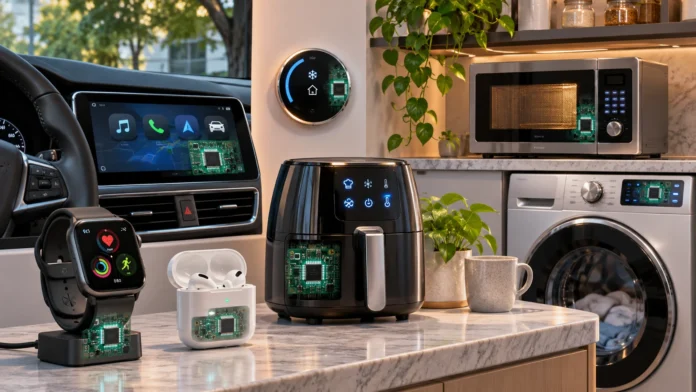

Embedded systems are small computers designed to perform specific tasks inside larger devices. They help control everyday technology, including washing machines, cars, smart TVs, medical equipment, and home security systems. Unlike regular computers, these systems usually focus on one function or a limited set of related operations. They work quietly in the background to make modern devices more useful.
You probably interact with embedded systems several times every day without realizing it. Your microwave uses one to manage cooking settings, while your car relies on several to monitor and control important functions. Even a simple digital thermostat contains computing technology that responds to temperature changes. These examples show how deeply embedded technology is connected to daily life.
What Are Embedded Systems?
An embedded system is a specialized computer built into a larger electronic or mechanical device. Its main purpose is to perform a particular function rather than handle many unrelated activities. It typically includes a processor, memory, and software designed for its assigned task. This focused design makes embedded systems useful in devices that require reliable and consistent operation.
Unlike desktop computers, embedded systems often have limited processing power, memory, and storage. These limitations are usually intentional because the system only needs enough resources to perform its specific functions. For example, a digital alarm clock does not need the computing capabilities of a laptop. It only needs to track time, manage alarms, and control its display.
Embedded systems can operate independently or communicate with other electronic components. Some respond immediately to changes in their surroundings, while others follow programmed instructions at regular intervals. Their complexity varies from basic controllers to advanced computing platforms. Regardless of their size, they help electronic products perform tasks accurately, efficiently, and with minimal human involvement.
How Do Embedded Systems Work?
Embedded systems work by receiving information, processing it, and producing an appropriate response. The information may come from sensors, buttons, switches, or connected devices. A processor follows programmed instructions to determine what action should happen next. This process allows the system to control equipment, display information, or communicate with other components automatically.
Consider a washing machine as a simple example of embedded system operation. When you select a washing program, its controller receives your instructions and manages the washing cycle. It may monitor water levels, temperature, and drum movement through connected sensors. Based on this information, the controller adjusts the machine’s operation until the selected cycle finishes.
Some embedded systems must respond within strict time limits to function correctly. These are often called real-time embedded systems because response timing is an important requirement. For example, an automotive safety controller must process relevant sensor signals quickly when certain conditions occur. Other systems, such as basic digital displays, can operate without similarly strict timing requirements.
Main Components of an Embedded System
The processor is one of the most important components of an embedded system. It executes instructions and coordinates the activities of connected hardware. Many devices use microcontrollers, which combine a processor, memory, and input/output features on a single chip. More complex applications may use microprocessors with additional components to handle demanding computing tasks.
Memory stores the instructions and information required for the system to operate. Nonvolatile memory keeps firmware available even when the device loses power, while RAM supports temporary processing activities. Input components collect information through sensors, switches, or communication interfaces. Output components allow the system to control motors, activate indicators, or send information to another device.
Embedded software connects these hardware components and controls how they behave. It may include firmware, device drivers, communication functions, and a real-time operating system. Power management circuits also play an important role, especially in battery-operated equipment. Together, these components create a dedicated computing platform that can perform its intended tasks without needing a traditional computer interface.
Types of Embedded Systems
Standalone embedded systems perform their assigned functions without depending on a separate computer. Common examples include digital calculators, microwave ovens, electronic weighing scales, and basic kitchen appliances. These systems receive input through buttons or sensors and provide an output through displays or mechanical actions. Their relatively simple design makes them suitable for many everyday electronic products.
Real-time embedded systems are designed to complete important operations within specified deadlines. They are commonly divided into hard real-time and soft real-time systems, depending on the consequences of missing those deadlines. Some industrial safety controllers have strict timing requirements, while certain multimedia applications tolerate occasional delays. Meeting the required response time is a central part of their design.
Networked embedded systems communicate with other devices through wired or wireless connections. Smart home controllers, connected security cameras, and network equipment are familiar examples. Mobile embedded systems are another category, designed for portable devices with limitations involving battery life, space, and processing resources. These categories can overlap because one embedded device may be portable, networked, and real-time.
Everyday Examples of Embedded Systems at Home
Home appliances provide some of the easiest examples of embedded systems in everyday life. Refrigerators use electronic controllers to monitor temperature and manage cooling operations. Microwave ovens use embedded processors to handle cooking times, power settings, and control panels. Dishwashers and washing machines also rely on programmed controllers to coordinate different stages of their operating cycles.
Smart home technology introduces additional embedded computing applications. Smart thermostats monitor indoor temperatures and adjust heating or cooling according to programmed settings. Connected door locks can process access codes, communicate with mobile applications, and control locking mechanisms. Smart lighting systems also use embedded controllers to respond to commands, schedules, and compatible sensors.
Entertainment devices contain embedded systems that support many familiar features. Smart televisions use processors and specialized software to manage displays, streaming applications, and remote-control commands. Gaming controllers may contain microcontrollers that interpret button presses and movement data. Wireless speakers use embedded computing components to manage audio processing, connectivity, and device controls during everyday operation.
Embedded Systems in Cars and Transportation
Modern vehicles contain numerous embedded systems that manage different mechanical and electronic functions. Engine control units use sensor readings to help regulate engine operation, fuel delivery, and emissions. Other controllers monitor vehicle conditions and coordinate electronic features. Working together, these specialized computers support performance, efficiency, diagnostics, and many features drivers depend on during normal operation.
Vehicle safety features also use embedded computing technology. Anti-lock braking systems monitor wheel speeds and help prevent wheel lockup during braking. Airbag control systems evaluate relevant sensor information and determine whether deployment conditions have been met. Electronic stability control systems use multiple inputs to help maintain vehicle stability, demonstrating the importance of dependable embedded hardware and software.
Embedded systems are also important in public transportation and modern electric vehicles. Trains use specialized controllers for functions such as monitoring, communication, and braking management. Electric vehicles contain battery management systems that monitor battery conditions and support safe operation. These applications show how dedicated computing systems help coordinate transportation equipment, although their design and complexity differ significantly.
Embedded Systems in Healthcare and Medical Devices
Medical equipment uses embedded technology to perform monitoring, measurement, and treatment-related functions. Digital thermometers measure temperature and present readings through electronic displays. Patient monitors process signals from connected sensors to display important physiological information. These applications require careful engineering because inaccurate measurements or unexpected failures can affect medical decisions and patient safety.
Some medical devices use embedded systems to control treatment delivery. Infusion pumps, for example, use electronic controllers to regulate fluid delivery according to programmed settings. Certain implanted medical devices also contain specialized processors that monitor signals and perform defined functions. Their hardware and software must undergo appropriate testing and validation because reliability is particularly important in healthcare applications.
Portable and wearable health devices provide additional examples of embedded computing. Fitness trackers use sensors and processors to estimate activity levels and monitor selected health-related signals. Some connected medical devices transmit measurements to compatible software for review. However, consumer wellness devices and regulated medical equipment have different intended uses, accuracy requirements, and levels of clinical oversight.
Embedded Systems in Industrial Automation
Factories rely on embedded systems to monitor equipment and support automated production processes. Industrial controllers receive signals from sensors and coordinate machines according to programmed instructions. These controllers may manage conveyor belts, packaging equipment, or manufacturing operations. Their ability to repeat tasks consistently helps businesses maintain production workflows while reducing the need for continuous manual control.
Robotic equipment uses embedded processors to coordinate movement and respond to sensor information. Industrial robots may rely on multiple controllers to manage motors, positioning, communication, and safety functions. Sensors provide feedback that helps the system monitor operating conditions. This combination of embedded hardware and control software supports accurate movement and repeatable performance across many industrial applications.
Predictive maintenance is another valuable application of embedded technology in industry. Connected sensors can collect measurements related to vibration, temperature, and equipment performance. Embedded controllers may process this information locally or send it to monitoring platforms for further analysis. By identifying unusual operating conditions, businesses can investigate possible maintenance issues before they develop into more serious equipment failures.
Embedded Systems vs General-Purpose Computers
The biggest difference between embedded systems and general-purpose computers is their intended function. A desktop computer can run many unrelated programs, including browsers, games, and productivity applications. An embedded system is typically designed around a specific task or group of closely related functions. This narrower purpose influences its hardware, software, cost, and performance requirements.
General-purpose computers usually offer more flexibility for installing applications and changing their functionality. Embedded systems often use specialized firmware that remains closely connected to the equipment it controls. Some embedded devices have simple interfaces, while others operate without a screen or keyboard. Their design prioritizes the needs of the larger product rather than general computing convenience.
There can also be important similarities between these computing categories. Both may use processors, memory, operating systems, storage, and communication interfaces. Advanced embedded platforms can run Linux or other complex operating systems, making them more capable than basic controllers. Therefore, the difference is not always computing power, but the purpose and environment for which the system was designed.
Benefits of Embedded Systems
One major benefit of embedded systems is their ability to perform dedicated tasks efficiently. Because their hardware and software are selected for specific requirements, they can avoid unnecessary computing overhead. Many designs also consume relatively little power, making them suitable for portable and battery-operated products. These characteristics help manufacturers create compact devices with practical functionality and manageable operating costs.
Embedded systems can also support dependable and consistent device operation. A carefully designed controller follows programmed instructions and responds to inputs in predictable ways. This is especially useful in industrial equipment, household appliances, and electronic monitoring applications. However, reliable operation still depends on proper engineering, component quality, testing, maintenance, and protection against unexpected operating conditions.
Another advantage is the ability to automate repetitive activities. Embedded controllers can collect information, make predefined decisions, and activate connected equipment without constant user involvement. For example, an automatic irrigation controller can manage watering schedules using configured settings and sensor information. This automation can improve convenience, reduce unnecessary resource use, and support more consistent equipment operation.
Challenges and Limitations of Embedded Systems
Limited computing resources are a common challenge when developing embedded systems. Many devices have strict restrictions on memory, processing capacity, power consumption, and physical size. Engineers must select components and design software that work within these limitations. Although dedicated hardware can improve efficiency, demanding applications may require more expensive processors, additional memory, or specialized computing components.
Security is another important concern, particularly for connected embedded devices. Weak authentication, outdated firmware, or insecure communication can create opportunities for unauthorized access. Manufacturers need to consider secure software updates, encryption, access controls, and long-term maintenance. Protecting embedded technology becomes especially important when devices manage sensitive information or control equipment connected to larger networks.
Testing and maintenance can also be difficult because embedded software interacts directly with physical hardware. Problems may involve timing errors, sensor failures, communication issues, or unexpected environmental conditions. Updating software can be challenging when devices have limited connectivity or must remain operational. These factors make careful planning, thorough testing, and ongoing support essential throughout the product lifecycle.
Embedded Systems and the Internet of Things
The Internet of Things, commonly called IoT, connects physical devices that collect, exchange, or act on information. Embedded systems often provide the computing foundation for these connected products. Sensors gather information, processors execute instructions, and communication modules exchange data with other devices. This combination supports applications such as smart buildings, connected appliances, and remote equipment monitoring.
Not every embedded system is an IoT device because many operate without an internet connection. A basic microwave controller, for example, can function entirely offline. An internet-connected smart thermostat, however, may exchange information with a mobile application or cloud platform. The key distinction is connectivity, rather than whether the device contains a dedicated processor or specialized software.
Connected embedded devices can also support edge computing, where information is processed close to its source. This approach can reduce communication delays and limit the amount of data sent to remote servers. For example, an industrial monitoring device may analyze sensor readings locally before reporting unusual conditions. Combining embedded computing, networking, and local processing creates opportunities for more responsive connected systems.
How Embedded Systems Are Designed and Developed
Embedded system development begins by identifying the tasks a device must perform. Engineers consider response times, operating conditions, energy requirements, cost, and available space. They then select suitable processors, memory, sensors, and communication components. Defining these requirements early helps teams avoid choosing hardware that cannot reliably support the intended software or operating environment.
Developers commonly write embedded software using programming languages such as C and C++. Some projects also use Rust, assembly language, Python, or other languages depending on the hardware and application. Development tools help programmers build, test, and debug their code. The finished software is usually transferred to the device’s memory so its processor can execute the required instructions.
Testing is an essential stage of embedded system development. Engineers check whether the hardware and software behave correctly under expected and unexpected conditions. They may evaluate timing performance, energy consumption, communication reliability, and responses to component failures. Once the product is deployed, maintenance and firmware updates may be necessary to address problems and improve supported functionality.
Future Trends in Embedded Systems
Embedded systems continue to evolve as processors become more capable and energy-efficient. Manufacturers are developing devices that can handle increasingly complex workloads within small physical spaces. Improvements in semiconductor technology also support new applications in wearables, connected equipment, and industrial monitoring. These developments allow engineers to create products that combine greater functionality with carefully managed power requirements.
Artificial intelligence is becoming an important part of advanced embedded computing. Some devices can run machine learning models locally to recognize patterns or process sensor information. This approach, often called embedded AI or TinyML in resource-constrained applications, can reduce dependence on remote processing. However, available memory, power consumption, model accuracy, and hardware capabilities still determine what each device can accomplish.
Security, connectivity, and long-term software support are also shaping embedded system design. Manufacturers increasingly need dependable methods for protecting connected devices and delivering firmware updates. At the same time, automation and smart infrastructure are creating demand for specialized controllers. These trends suggest embedded technology will remain essential as electronic products become more connected, capable, and responsive.
Conclusion
Embedded systems are specialized computers that control many devices people use every day. From kitchen appliances and smart thermostats to vehicle safety equipment and medical devices, they help technology perform specific functions. Their combination of hardware and software supports automatic operation, accurate control, and efficient processing. Understanding these systems makes it easier to appreciate the technology behind familiar electronic products.
The main advantage of embedded technology is its task-focused design. Instead of performing every function of a general-purpose computer, an embedded system is built around particular operating requirements. This approach can provide benefits involving efficiency, size, reliability, and energy consumption. However, engineers must also address challenges related to security, limited resources, software maintenance, and hardware compatibility.
As connected devices, automation, and artificial intelligence continue developing, embedded systems will support many new applications. Their role extends across homes, transportation, healthcare, manufacturing, and communication infrastructure. Learning the basics of embedded systems is useful for students, technology enthusiasts, and anyone interested in modern electronics. These small computing platforms remain a fundamental part of the digital world.
Frequently Asked Questions (FAQs)
What is an embedded system in simple words?
An embedded system is a small computer built into a device to perform specific tasks. Examples include microwave controllers, washing machine processors, digital clocks, and automotive control units that help equipment operate automatically.
What are five examples of embedded systems?
Five common examples are washing machines, microwave ovens, digital thermostats, automotive engine control units, and smart door locks. Each contains dedicated computing components that manage particular functions according to programmed instructions.
What is the difference between embedded systems and computers?
Embedded systems are designed primarily for specific functions within larger devices. General-purpose computers are designed to run many different applications. Both use computing hardware and software, but their intended purposes differ.
Is a smartphone an embedded system?
A smartphone is generally considered a general-purpose mobile computing device because it runs many different applications. However, it contains multiple embedded subsystems that manage functions such as cameras, wireless communication, and power management.
What programming languages are used in embedded systems?
C and C++ are widely used in embedded software development because they provide control over hardware and system resources. Other languages, including assembly, Rust, and Python, are used depending on project requirements.

